Selling your home should be an exciting leap into a new chapter. However, for a staggering number of Americans, it turns into a drawn-out nightmare. The truth is, many homes stay on the market much longer than people expect, and the most crucial factor is often overlooked. The solution lies in understanding how to choose a real estate agent based on their strategy, not just their personality.
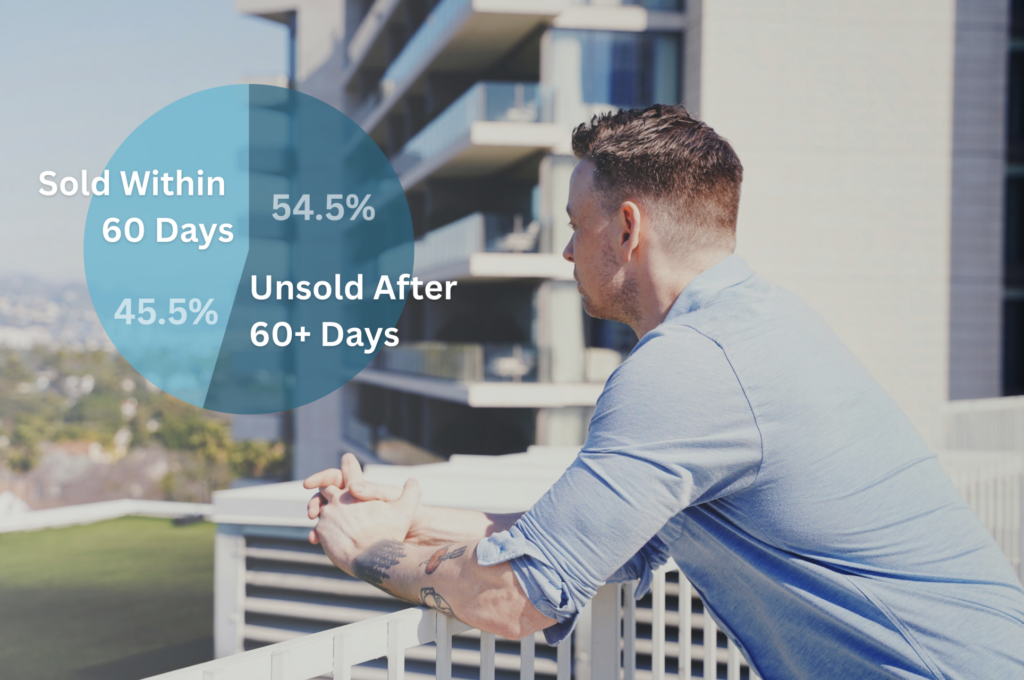
Recent data paints a stark picture. For instance, towards the end of last year, over half (54.5%) of homes listed for sale were still on the market after 60 days or longer without going under contract (Source: Redfin News, Nov 2024 data), even though the market seemed busy.
So, what’s going on? It’s easy to point fingers at interest rates or the broader economy, and they certainly play a role. But often, the problem starts with the home’s presentation and marketing. These areas are directly influenced by your real estate agent’s choices. This guide will teach you how to choose a real estate agent who is a true marketing powerhouse, ensuring you get the result you deserve.
The Two Types of Agents
Imagine two nearly identical houses for sale on the same street. One sells in 10 days for over the asking price. The other sits for three months and undergoes two price cuts before finally selling. What made the difference? The agent. In today’s market, you’re either hiring a strategic marketer or just a “lister.”
Putting a sign in the yard and a basic entry on the MLS is not a marketing plan. Here’s how a top agent’s strategy differs.
Feature Comparison The Standard Agent (The "Lister") A Top-Tier Marketing Agent (The "Seller")
Photography Uses decent, but uninspired, photos. The lighting is okay, but the rooms feel empty and bland. Hires a professional real estate photographer who specializes in capturing light, space, and emotion. Every shot tells a story.
Virtual Experience Might not offer a virtual tour, or provides a basic, clunky slideshow of photos. Provides an immersive interactive 3D tour (like Matterport) and a cinematic walkthrough video that shows the home's flow and feel.
Marketing Reach Puts a sign in the yard and lists the home on the local MLS. They wait for buyers to come to them. Actively pushes the listing across social media, targeted digital ads, and their network of buyer's agents. They hunt for buyers.
Pricing Strategy May suggest a high price to win your business, leading to inevitable price reductions later. Provides a detailed Comparative Market Analysis (CMA) with hard data, explaining a strategic price designed to generate buzz and multiple offers.
Property Information Basic listing with room measurements. Includes professional floor plans, which can boost buyer click-through rates by over 50%, as buyers can visualize their life in the space.
The difference is clear. One approach gets your home listed. The other gets your home sold.
What Truly Makes a Listing Shine?
To get top dollar, your home’s digital presence has to be flawless. This simple three-step guide is the core of how to choose a real estate agent who will truly work for you.
Professional Photography is Non-Negotiable
High-quality, professional real estate photography is extremely important. Studies show listings with professional photos get up to 61% more online views. Furthermore, they can also help sell your home up to 32% faster (according to NAR data).
A Compelling Property Description
The description needs to do more than list features. Specifically, it needs to tell a story and highlight the lifestyle your home offers, painting a picture that resonates with buyers.
Accurate Floor Plans
Buyers consistently rank floor plans as one of the most important listing features, right after photos and basic data (NAR via Ursin Professional Editing, PropertyBox). Research indicates 1 in 5 potential buyers might ignore a listing entirely without one. Floor plans help buyers visualize the layout and understand room flow. They can determine if the space fits their needs before visiting. As a result, this saves time for both them and the seller’s real estate agent. Listings including a floor plan can also see click-through rates increase by up to 52%.
High-Quality Video Tours
Static photos only go so far. Video is incredibly powerful; listings that incorporate real estate video reportedly receive a staggering 403% more inquiries (Based on Amplifies). A professionally shot walkthrough video lets potential buyers experience the home’s flow, ambiance, and feel. Pictures alone cannot replicate this. Additionally, animated video walkthroughs based on 3D models can offer a compelling digital preview for any property. They are particularly powerful for visualizing homes under construction or showcasing potential renovations, offering a polished look at what could be.
Drone Photography/Video
Does your property boast significant land, unique landscaping, stunning views, or desirable surroundings? If so, drone footage is invaluable. Offering perspectives impossible from the ground, drone visuals effectively showcase these key assets. Studies show properties marketed with drone footage sell 68% faster on average (According to NAR).
Interactive 3D Models & Virtual Tours
Virtual tours for real estate take immersion further. These tools allow buyers to digitally ‘walk through’ your home 24/7. Then, they can explore layouts and room dimensions at their own pace. This isn’t just a gimmick. Listings featuring virtual tours garner significantly more engagement – potentially 40% more clicks and 87% more views (REsimpli, HomeJab). Crucially, this deeper engagement can translate into real results: sales closing up to 31% faster and potentially achieving a 9% higher sale price (According to Matterport). Moreover, modern tools like CubiCasa make these powerful assets highly accessible. Using only a simple smartphone scan, agents can quickly generate accurate 2D and 3D floor plans, 3D video renders of the house, plus interactive tours linking photos directly to the layout. Ultimately, these models help buyers truly grasp the space, proportions, and potential, moving them closer to making an offer.
Incorporating these modern visual marketing strategies isn’t merely about looking sophisticated. Rather, it’s a strategic necessity to sell your home faster in today’s market. It’s about attracting more qualified buyers, holding their attention, potentially speeding up your sale, and ultimately achieving a better outcome. Ensure your chosen real estate agent understands the power of these tools and has a concrete plan to utilize them effectively for your listing.
Here is an example of interactive home tour: CubiCasa tour
After getting a feel for the home through a virtual tour, the next logical step is to ensure your agent is the right fit. Let’s look at how to verify their relevant experience.
How to Choose a Real Estate Agent in 3 Steps
Now that you know what to look for, it’s time to find your agent. This vetting process will help you identify a true professional.
Step 1: The Marketing & Pricing Interview
This is where you grill them on their strategy. Don’t be shy and ask them directly, “Can you show me the complete marketing package for your last three listings?” A top agent will be excited to show you their professional videos, 3D tours, and ad campaigns. If all they have are basic photos, they are not a marketer. Then, challenge their pricing strategy by asking, “How did you determine the recommended list price for my home?” They must show you a detailed Comparative Market Analysis (CMA). If they can’t defend their price with hard data, they are just guessing. This is one of the biggest real estate agent mistakes and the #1 cause of homes sitting on the market.
Step 2: The Reputation & Trust Audit
A great agent is both skilled and trustworthy. You need to check their independent reviews and not just rely on what’s posted on their own website. Dig into their history on Zillow, Google, and Yelp. Read the one-star reviews as well as the five-star ones, looking for patterns in communication and problem-solving. It’s also vital to assess their communication style from the very first call. Are they responsive, clear, and professional? An agent who ghosts you when trying to win your business will surely disappear once you’ve signed the contract.
Step 3: The Network & Resources Check
A top agent acts as a project manager. You should ask them, “What does your support network look like?” They should have a trusted “Rolodex” of reliable and affordable contractors and stagers to get your home market-ready fast. Remember to interview at least three different agents to compare their plans, experience, and fees. This comparison is a crucial step to choose a real estate agent who offers the best overall value, not just the lowest price.
Don’t Forget the Money Talk
Let’s address the elephant in the room: what percentage do most realtors take? In the US, total commission typically ranges from 5% to 6% of the home’s sale price, which is usually split between the seller’s agent and the buyer’s agent.
It can be tempting to choose an agent who offers a lower commission. However, this is often a costly mistake. If a discount agent’s weak marketing results in your home selling for 3% less after two extra months on the market, you haven’t saved any money. Think of commission as an investment in a better outcome.
Look for Clear, Proactive Communication
Experiencing uncertainty regarding communication with your real estate agent can be a warning sign. Perhaps you have been ghosted for too long. Maybe calls to your agent often go unanswered. These could be signs that something is wrong.
Therefore, always choose someone responsive, who will communicate with you clearly and regularly in a way that suits you. Establish expectations upfront. You need to trust your agent and feel comfortable working together.

Don’t Be Afraid to Compare
Explore the market. Choosing a real estate agent is an important decision, so take your time.
- Talk to Several Agents: Try to talk with at least three different agents before deciding. This lets you compare their plans for selling your home, their experience, their fees. In addition, you can assess their local market knowledge, and how well you connect with them personally.
- Look for Value, Not Just the Lowest Price: Don’t just pick the agent with the lowest fee or the one a friend recommended without checking them out carefully. The cheapest real estate agent might not be able to sell your home quickly if their marketing plan isn’t strong or their experience doesn’t fit your needs. The goal is to get the best final result for you.
The Takeaway
In today’s market, selling a home quickly and for the best price requires more than just listing it. Instead, it requires a strategic partner who understands modern marketing, realistic pricing, and proactive communication, and who treats your sale with the diligence they’d use for their own home. By carefully vetting potential agents using these criteria, you significantly improve your chances of a successful sale, rather than becoming another statistic in the “unsold inventory” column.