The past year was a challenging one for the construction industry. From supply chain disruptions to rising material costs and labor shortages, builders faced significant obstacles that tested their resilience. However, the construction sector is on the brink of a remarkable period of growth. According to Glenigan, new project starts are forecast to grow by 8% in 2025, driven mainly by public sector and infrastructure projects.
As 2025 unfolds, the construction landscape is set to evolve. This year promises to bring significant shifts to the construction industry. Public sector projects are expanding and sustainable infrastructure is becoming a critical focus. At the same time, advanced technologies and evolving workforce dynamics are reshaping how the industry operates. In this post, we explore these changes, provide practical cost-saving tips, and highlight how tools like floor plans apps are setting the stage for a smarter future in construction.
Section 1: Top Building Trends Shaping Construction in 2025

1. Sustainable Building Practices
Sustainability is no longer optional. Builders are embracing green materials like bamboo, recycled steel, and hempcrete to meet client and regulatory demands. Energy-efficient designs, solar panel integration, and LEED certifications are becoming standard features in both residential and commercial construction. Also modular and prefabricated construction techniques are gaining traction for their ability to save time and reduce waste. Builders can assemble components off-site in controlled environments, ensuring higher quality and faster installation on-site. This method is particularly effective for large-scale housing projects and commercial buildings.
2. Smart Home Integration
In the digital age, where connectivity and automation are becoming the norm, clients are demanding homes equipped with smart thermostats, lighting, and security systems. Builders must collaborate with technology providers to deliver properties that are both future-ready and user-friendly.
3. Interactive Floor Plans for Better Collaboration
Even floor plans have evolved from static blueprints to dynamic tools that enhance collaboration. CubiCasa’s 2D floor plans offer a clear, straightforward representation of the space, ensuring everyone is on the same page from the start. In addition, solutions like CubiCasa’s interactive floor plans enable builders, architects, and clients to explore high-quality images of specific views within the floor plan and a clickable layout. By aligning everyone’s vision from the start, these tools minimize the risk of expensive revisions. Tools like CubiCasa provide accurate, visually rich floor plans that clients can easily understand, reducing costly misunderstandings or changes mid-project.
Section 2: Cost-Saving Strategies Without Compromising Quality

1. Efficient Project Management
Efficient project management tools like Procore and Buildertrend streamline communication, scheduling, and resource allocation. Regularly reviewing timelines and budgets can help builders stay on track and avoid costly surprises. Furthermore, partnering with local suppliers reduces transportation costs and ensures timely deliveries. Additionally, using recycled or reclaimed materials lowers expenses while ensuring that the building trends remain sustainable.
2. Using CAD Files to Ensure Design Clarity
CAD software revolutionizes the creation and modification of floor plans. It allows for precise drafting, easy adjustments, and the generation of detailed 2D and 3D models. This precision is crucial for builders and contractors, as it minimizes errors and enhances project efficiency. The synergy between floor plans and CAD technology significantly influences the real estate market. High-quality floor plans attract potential buyers by offering clear insights into a property’s layout. Listings with 2D floor plan drawings have been shown to spend less time on the market, as they help buyers visualize the space more effectively.
3. Waste Reduction
Waste management is a significant cost factor in construction. Implementing precise measurements and cutting techniques, as well as leveraging modular construction methods, can significantly reduce on-site waste and associated expenses.
Section 3: Technology Transforming the Construction Industry
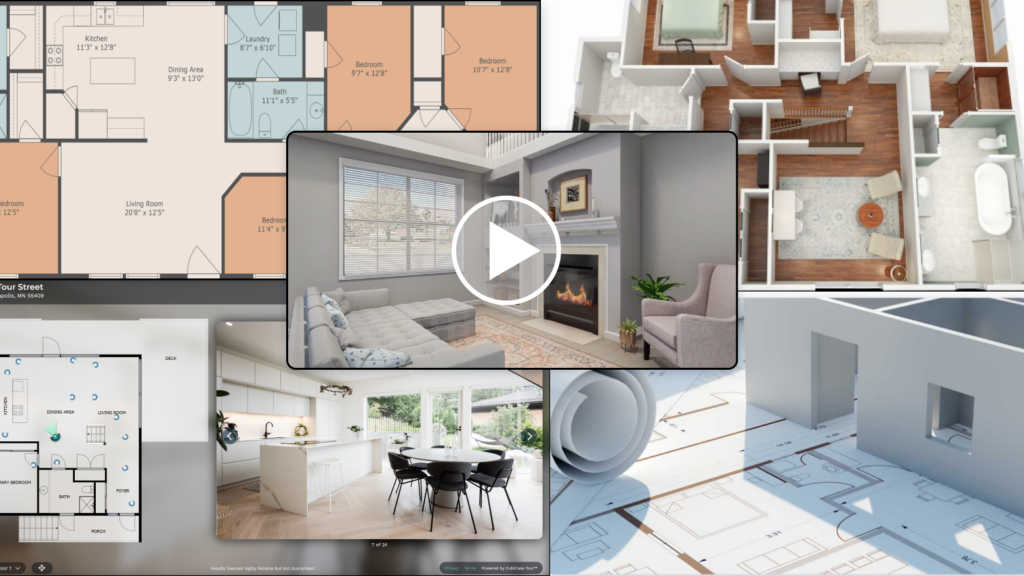
The building industry is increasingly adopting innovative technologies and building trends that are reshaping how projects are planned, executed, and experienced. Among the technology building trends are drones. Drones can be found at the forefront of this transformation, offering precise, real-time mapping and monitoring that significantly streamline site surveying. With drones, builders can identify potential issues early, reducing costly delays and ensuring a smoother project lifecycle. Meanwhile, artificial intelligence (AI) is revolutionizing project management by enhancing decision-making, optimizing resource allocation, and predicting potential setbacks. By automating routine tasks, AI allows builders to focus on what truly matters, boosting productivity and cutting down costs. On the client-facing side, tools like CubiCasa are making waves, revolutionizing the building trends for 2025.
CubiCasa for Builders:
- Interactive Floor Plans:
- Allow clients to virtually “walk through” spaces once the building is complete, improving client engagement and alignment with the design.
- Minimize revision cycles and build trust with clients.
- 2D Floor Plans:
- Offer a clear, straightforward representation of the layout, helping to communicate designs effectively before construction starts.
- Snapshots:
- Provide high-quality images of specific views within the completed space, offering clients a detailed understanding of the product.
- CAD Solutions:
- Enable precise, detailed designs that help builders avoid costly errors during construction.
- Ensure the project stays on track with clear, accurate blueprints.
- 3D Rendering:
- Used after construction to provide realistic, immersive visualizations of the completed building.
- Helps clients experience the space as if it were finished, aiding in final decisions and reducing the need for post-construction revisions.
By integrating our technologies, builders can save time, streamline their processes, and avoid expensive revisions or the problems ahead – leading to smoother project execution and higher client satisfaction.
Conclusion: Building Smarter for the Future
The construction industry is at a turning point, with innovation driving new opportunities to build smarter, faster, and more sustainably. By embracing trends like modular construction, adopting cost-saving practices, and leveraging technology like AI, drones, and interactive floor plans from CubiCasa, builders can stay ahead in an increasingly competitive market.
Want to future-proof your construction business? Explore how CubiCasa’s floor plans can enhance collaboration, improve client satisfaction, and save costs. Let’s build the future together!