As we navigate the dynamic real estate market of 2025, one truth has become undeniable: the days of simple, point-and-shoot property photos are over. Today’s buyers, accustomed to sophisticated digital experiences, expect more than just a glimpse into a home—they demand an immersive, compelling preview. Standard photography is no longer enough to stand out.
To capture attention and attract serious offers, agents and photographers must evolve into strategic marketing partners. This means embracing the technological and stylistic shifts that are redefining how properties are sold. Drawing from the expert analysis in this video, this guide breaks down the most impactful trends of 2025 and provides an actionable plan to keep your listings ahead of the curve.
[lwptoc]
Trend #1: Selling the Feeling: The Rise of Story-Driven Content
The single biggest trend is the shift from descriptive marketing to story-driven content. Buyers are experiencing “ad fatigue” and scroll right past listings that don’t make an immediate, personal connection. This strategy combats this by placing the viewer in a first-person perspective.
- The “What It’s Like to Be Here” Approach: Instead of just showing a wide shot of the kitchen, this trend focuses on capturing the feeling of the space. It answers the question, “What would it be like if I were standing here?” This could be a close-up shot of the view from the kitchen sink or a photo that frames the cozy reading nook by the window. It’s about creating intimate, relatable moments.
- Driven by the “HGTV Effect”: A key driver behind this is the “HGTV Effect.” Decades of home renovation shows have trained both sellers and buyers to expect a very high level of quality. If a listing’s visuals don’t meet this polished, professional standard, the property itself is often perceived as being of lower quality. This has fueled the shift from basic HDR photography to more advanced techniques like flambient, which uses flash to produce clean, magazine-quality images.

Trend #2: Practical AI and Its Economic Impact
Artificial intelligence has moved from a buzzword to a practical tool that impacts workflows and business finances. It works as a powerful assistant, saving time and creating new revenue opportunities.
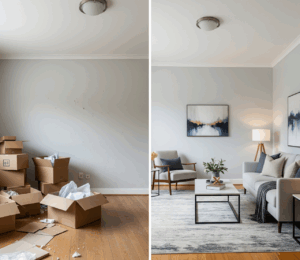
- In-House Upsell Opportunities: With AI tools like Photoshop’s Remove Tool, photographers can now handle complex edits like object removal in minutes. This creates a direct revenue stream, allowing them to offer decluttering as a fast, in-house upsell service.
- Driving Down Outsourcing Costs: The proliferation of AI is also making outsourced editing cheaper and faster. AI-powered platforms are reducing the time and money photographers spend on post-production, a direct benefit to their bottom line.
- AI’s Inevitable Plateau: Despite its advancements, AI has critical limitations. It requires a constant stream of new, human-created content to learn from (a problem known as “AI Model Collapse”). This ensures that the skill, creativity, and artistic eye of a professional photographer will always remain essential.
Trend #3: Shareable Video: Unlocking Engagement on Social Media
While a full suite of assets is important, 2025 has seen a clear re-ordering of which add-ons provide the most value.
- Video Dominates for Social Media: The rise of video is directly tied to agents leveraging social media. Video, especially short-form Instagram Reels and TikToks, is now the most powerful add-on because it is shareable. You simply cannot share a 3D tour on Instagram. Video is the native language of social media and the key to reaching the widest audience.
- Higher Average Order Value: The demand for video is increasing the revenue per listing. Agents may now request multiple video assets for one property—a traditional walkthrough for the listing and a separate, vertically-oriented branding video for their social media channels.
- The Role of Floor Plans and Drones: Floor plans (especially from apps like CubiCasa) remain essential for giving buyers a logical understanding of the layout. Drones are crucial for providing context and telling the story of the home’s location and lifestyle. Both are key parts of a complete package, but video is what drives engagement and discovery.
Your 2025 Action Plan
- Elevate Your Visuals to Tell a Story. Move beyond simple documentation. Work with your photographer to capture the lifestyle and feeling of the home, creating content designed to connect emotionally with buyers.
- Make Vertical Video a Standard. For every listing, create a short, engaging vertical video specifically for social media. This is the single most effective way to capture attention and drive traffic to your listing.
- Upgrade to a Professional Partner. When hiring a photographer, ask about their business systems, their video capabilities, and their use of AI for enhancements. Partner with professionals who can deliver a complete, modern marketing package seamlessly.
Frequently Asked Questions (FAQ)
Q1: What is the essential visual package for a listing in 2025? At a minimum, every listing should have: 1) High-quality, professionally edited photos that tell a story; 2) A clear floor plan; and 3) A short, vertical video for social media. For luxury properties, drone photography and a 3D tour remain valuable additions.
Q2: Will AI replace my professional photographer? No. AI is a powerful assistant that handles repetitive tasks, but it cannot replace the creative skill of a professional who knows how to compose a shot, control lighting, and create a mood. AI enhances their work; it doesn’t replace it.
Q3: Is a video or a 3D tour better for buyer engagement? They serve different purposes, but video is currently far more effective for marketing and discovery. A 3D tour is for immersive exploration by already-interested buyers, but a video is shareable on social media, allowing you to reach thousands of potential buyers who might not have otherwise seen the listing.
Q4: Why are floor plans still so important? While video creates excitement and photos create emotion, a floor plan provides the logical understanding a buyer needs. It answers fundamental questions about a home’s layout, flow, and room dimensions, solving the “mental gymnastics” of trying to piece a home together from photos alone.